
Water Quality Basics
Most homeowners assume their tap water is “fine” because it meets legal standards. In reality, legal limits and healthy limits are not the same. Municipal water is treated for safety, not quality, and many contaminants remain in levels that affect taste, smell, and long‑term comfort.
This page gives you a simple, clear overview of the most common issues found in U.S. tap water and why whole‑home filtration makes such a noticeable difference.
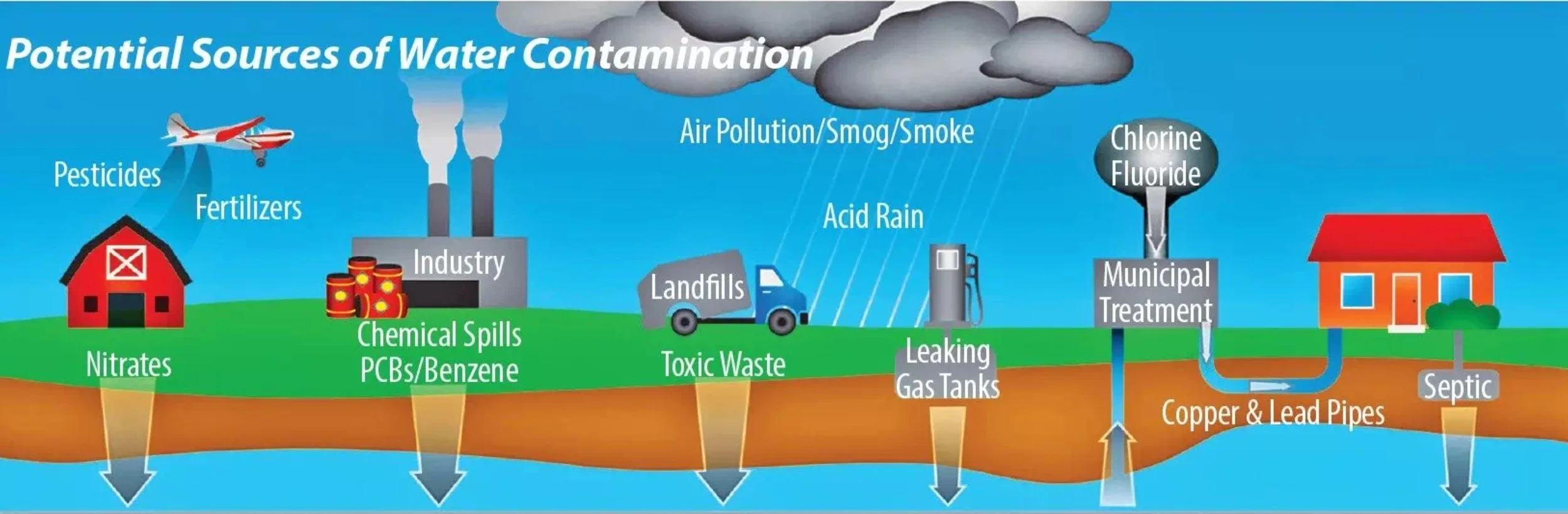
Common contaminants found in tap water:
Chlorine & Chloramines
Cities add chlorine to disinfect water. It’s effective, but it leaves behind:
• A strong smell
• Dry skin and hair
• Bad‑tasting water
• Irritation for sensitive individuals
Chloramines (a chlorine‑ammonia blend) are even harder to remove without proper filtration.
Hard Water Minerals (Calcium & Magnesium)
Hard water is one of the most common household issues. It causes:
• Scale buildup on fixtures and appliances
• Reduced water heater efficiency
• Soap scum and cloudy dishes
• Dry skin and brittle hair
Softening removes these minerals and protects your home’s plumbing.
Sediment & Rust
Aging pipes and municipal infrastructure can introduce:
• Sand
• Silt
• Rust particles
• Cloudiness
These particles wear down appliances and affect clarity and taste.
PFAS (“Forever Chemicals”)
PFAS are man‑made chemicals found in many water supplies across the U.S. They are extremely persistent and require advanced filtration to reduce.
VOCs & Chemical Byproducts
Volatile Organic Compounds can enter water through industrial runoff, agriculture, and disinfection processes. They affect taste, odor, and long‑term water quality.
Microplastics
Tiny plastic particles are increasingly found in municipal water systems. Standard treatment does not remove them.
How whole‑home filtration helps
A properly designed whole‑home system addresses these issues at the point where water enters your home. Benefits include:
• Cleaner, better‑tasting water from every tap
• Softer skin and hair
• Longer‑lasting appliances and plumbing
• Reduced scale buildup
• Fewer chemicals and contaminants
• Better shower, laundry, and cooking experience
Instead of treating water at a single faucet, whole‑home filtration protects your entire home.
Why legal limits aren’t the same as healthy limits.
Municipal water systems are required to meet federal standards, but those standards:
• Haven’t been updated in decades for many contaminants
• Allow levels that are “safe enough” for the general population
• Don’t account for long‑term exposure
• Don’t address taste, smell, or hardness
Filtration bridges the gap between “legally safe” and truly clean, healthy water.
How to understand your home’s water
Every home’s water is different depending on:
• Local treatment methods
• Pipe age
• Water source (groundwater vs. surface water)
• Seasonal changes
• Regional contaminants
If you want clarity, we can pull your local water report and walk you through it in plain English. Just share your ZIP code when you reach out.
Next steps
If you’re exploring filtration for your home, the best place to start is a simple conversation. We can help you understand what’s in your water and recommend the right system for your needs.